
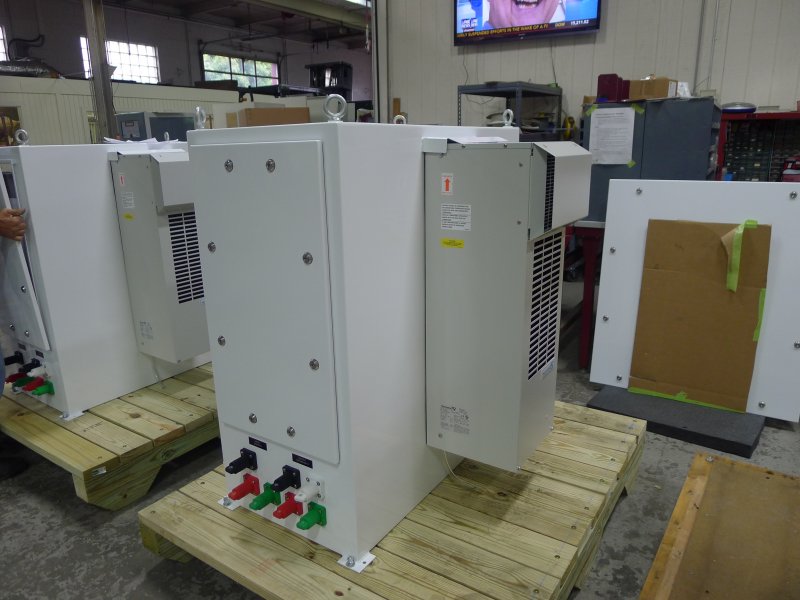
In the high-stakes world of industrial manufacturing and infrastructure, every kilowatt counts. For decades, many facilities operated on a simple premise: if a motor needed to run, it ran at full speed. However, as energy costs fluctuate and global competition intensifies, this “all-or-nothing” approach to power management has become a significant financial liability. Enter the Visicomm Industries frequency converter, a sophisticated piece of power electronics that has transformed from an expensive niche component into one of the most reliable drivers of return on investment in the modern industrial landscape. By aligning energy consumption with actual process demand, these devices offer a multi-faceted financial benefit that extends far beyond a simple reduction in the monthly electric bill.
Reducing Mechanical Wear and Maintenance Expenses
While energy savings capture the headlines, the impact of frequency converters on maintenance budgets is equally profound. Traditional “across-the-line” starting methods subject motors and their connected machinery to massive surges of torque and current. This “hammer effect” causes significant stress on belts, bearings, gearboxes, and seals. The resulting mechanical fatigue leads to more frequent repairs, shorter equipment lifespans, and, most importantly, unplanned downtime that can cost a facility thousands of dollars per hour in lost production.
Frequency converters provide a soft-start capability, gradually ramping up the motor to its required speed. This eliminates the violent jerks and thermal spikes associated with traditional starting. By smoothing out the operational profile of the machinery, converters significantly extend the mean time between failures. When a business calculates its return on investment, it must include the “avoided costs” of emergency repairs and the extended replacement cycles for expensive motor assets. Over a ten-year period, these maintenance savings can often rival or even exceed the direct energy savings.
Process Optimization and Improved Product Yield
Beyond the motor itself, frequency converters provide a level of precision that can directly improve the quality of the industrial output. In many processes, such as chemical mixing, textile manufacturing, or food processing, the ability to fine-tune the speed of a conveyor or an agitator is critical to product consistency. A fixed-speed system often results in over-processing or uneven quality, leading to waste and discarded batches.
By integrating frequency converters into a facility’s automated control system, operators can maintain the exact parameters required for a perfect product every time. This reduction in scrap and increase in “first-pass” yield has a direct impact on the company’s gross margin. In this context, the frequency converter is not just an energy-saving device; it is a quality-control tool. The ability to produce more high-quality goods with the same amount of raw material and time is a powerful multiplier for any return on investment calculation.
Improving Power Factor and Grid Stability
From an electrical perspective, many industrial motors have a poor power factor, which is essentially a measure of how effectively they use the electricity provided by the utility. Utilities often charge significant penalties to industrial customers with a low power factor, as it forces the grid to work harder to deliver the same amount of useful power. Frequency converters naturally improve the power factor of the loads they control, often bringing it close to unity.
This improvement can lead to the removal of utility surcharges, providing an immediate boost to the facility’s financial performance. Furthermore, by reducing the total kVA demand on the building’s electrical infrastructure, frequency converters can free up capacity on existing transformers and switchgear. This allows a facility to expand its operations or add new machinery without the need for expensive electrical service upgrades, representing a significant capital expenditure avoidance that is often overlooked in traditional ROI models.
Conclusion
Installing frequency converters is one of the few industrial investments that offer a “trifecta” of benefits: lower operational costs, reduced maintenance risk, and improved product quality. While the initial purchase price and the technical requirements of installation may seem daunting, the cumulative financial impact is undeniable. When a business looks past the sticker price and analyzes the total lifecycle cost, the frequency converter emerges as a low-risk, high-reward asset.


